Olga Klip – Artistic Counseling (interview)


In a few words, who are you?
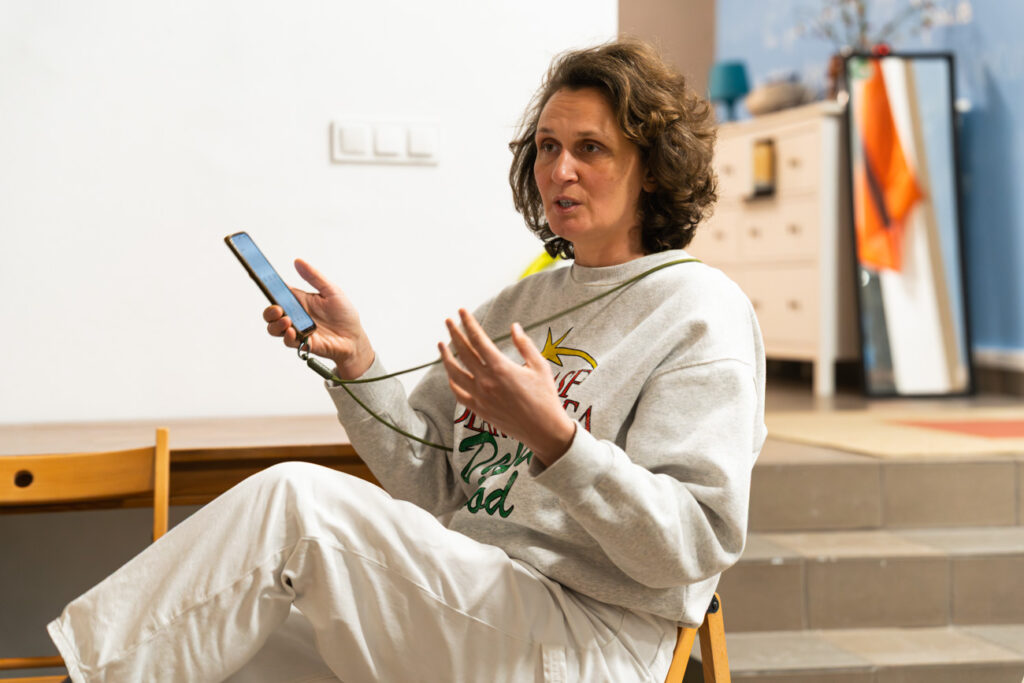
My name is Olga Klip. I am a contemporary art curator, art project manager, and mentor for artists.
What is the Artistic Counseling project about?
The project started some time ago when I noticed that there are quite a lot of opportunities for artists, but they often do not know how to make use of them: how to submit applications, how to answer questions in open calls, or what an artistic portfolio should look like. This is knowledge that is not taught at art schools. There are some programs outside academia, but it is always the individual artist’s responsibility to learn these things.
At the same time, creating an artistic portfolio is necessary in order to present what an artist does. The Artistic Counseling Project is about advising artists and helping them understand how to function within the art industry. I think artists need communication with curators, but curators are not always open to having such conversations with everyone.
The Artistic Counseling project works in a way that any artist can come and talk about what concerns them on their artistic path.
How did it begin?
The Artistic Counseling project was created while I was applying for a program at the Ujazdowski Castle Centre for Contemporary Art called “Opening to Everyone.” I did not receive funding, but I realized that when an institution says “we are opening to everyone,” it does not always mean that it truly opens itself.
I thought that just as every person has access to medical consultation, an artist should have access to artistic consultation. It would be good if people working in the arts had access to advice, consultations, and guidance. In fact, this should be a normal practice in every art institution.
For me, this project comes from the perspective of institutional critique. I do not agree with the fact that large institutions create rules for entering and collaborating with them, but do not explain to artists how these requirements can actually be fulfilled.
Who is the Counseling project aimed at? Beginner or experienced artists?
It is aimed at beginner artists, because experienced ones already have access to curators.
What can people who apply expect?
They can expect to be listened to and approached analytically. This concerns not only their artistic work, but more broadly how to build understandable communication around it.
They can come with their artistic portfolio and show how they present themselves and their work. They can expect guidance on what works in the portfolio, what does not work, and how it can be improved. They can also receive advice about which direction might suit them better, considering their level and interests. Should they apply for artistic residencies, approach galleries, or public art institutions? What should they present to whom, and what should they pay attention to when communicating with these institutions?
What difficulties do artists face when entering the art market?
From my experience, art institutions are very closed.
Part of a curator’s work is choosing who gets to enter this world. This creates a misunderstanding between institutions and emerging artists, who do not understand how to reach the people making these decisions. It is difficult to begin communication with curators.
I once worked on a project in Belarus where any artist could participate. I encountered snobbery not only from curators, but also from experienced artists who did not want to exhibit on the same wall as beginners. This closed attitude toward people, this selection of who gets to show work with whom and who is worth talking to, is for me snobbery in its purest form. It creates thematic and formal bubbles in art, and outsiders simply cannot enter them.
Besides that, there is enormous competition. There are now so many artists and so many artworks being created that there is not enough space in homes or galleries to hold everything, nor enough people to see it all. That is why, in my own work, I focus more on performative and activist practices rather than creating new objects.
Why do artists actually need curators?
One head is good, two are better.
A curator has a different perspective. The artist works with the object, while the curator works with space and the audience. That is the division of responsibilities. If you try to do everything yourself, you will probably do it badly. Some things are worth handing over to someone else.
Of course, there are artists who work with text, but the curator’s role is to develop a text that will be understandable to the audience.
Do these fields overlap? Do you sometimes feel like an artist yourself?
Yes. Artists, if they want, can also be curators. I also sometimes become an artist, especially in socially engaged projects, because when I involve both artists and audiences in creative actions, I see myself as a performance artist.
What internal difficulties do people who want to work in art face?
The first and most common one is impostor syndrome — especially among women, who tend to suffer from it more — and the pursuit of perfectionism.
Many artists think, “I’ll show my work only once I make it better.” But the point is that you need to start showing your work at an early stage, because feedback is what allows you to move forward. And very few artists really know how to put together a clear portfolio, which works to include, in what order, and what information about the works should be added.
Nowadays there is a huge amount of information about programs people can participate in. For many, it is difficult to decide which opportunities are actually worth pursuing. There are many paid open calls, and artists often pay but receive nothing in return.
Which collaborations do you remember most positively?
Recently, my best collaboration has been with Strefa WolnoSłowa. It has greatly expanded my possibilities. Since moving to Poland, I have started to understand how NGOs operate and what opportunities they create.
Besides that, I have had very positive experiences collaborating with my partners in southern Italy, in the town of Stilo. They are very open-minded, and everything feels possible there, which is why building an artistic residency there has been so easy for us. You can walk out into the street, ask for a screwdriver, and someone will simply give it to you.