How to create a good art portfolio?


How to create a good art portfolio?
A portfolio is one of the essential professional tools for an artist. It can be useful when applying for residencies, grants and open calls, when approaching galleries and institutions, and when presenting your practice to potential collaborators. A good portfolio should not be an archive of everything you have ever created. Its purpose is to show who you are as an artist, what you do and how your practice is developing.
text: Olga Klip
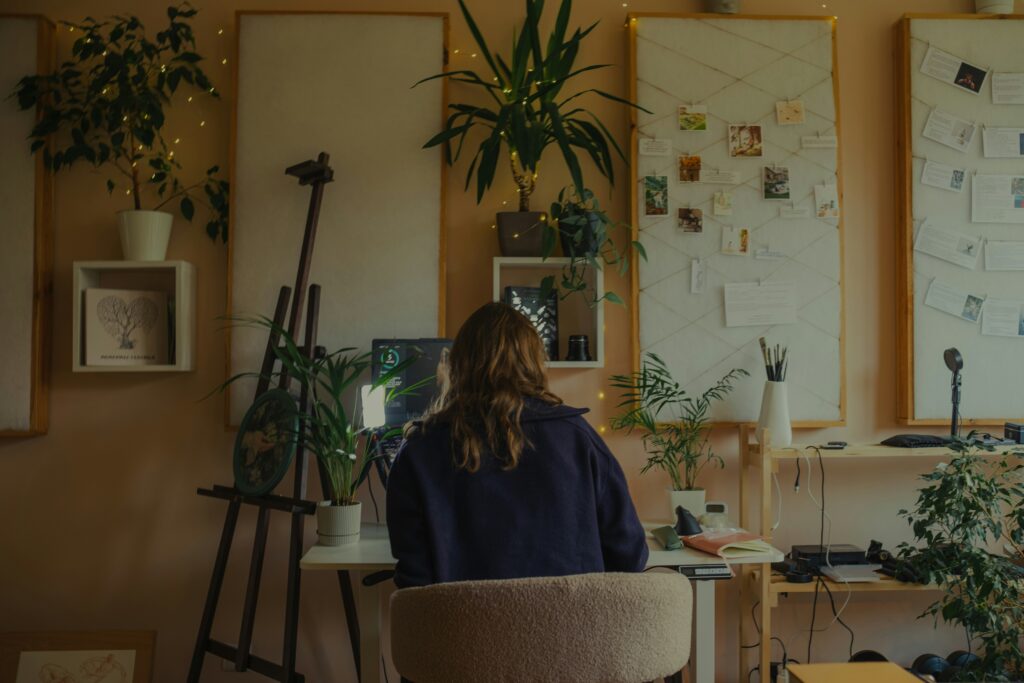
photo: Hanna Lazar / Unsplash
What should an art portfolio include?
- A short bio
A few sentences introducing your practice: who you are, where you work, what you do and which areas or media are most important to you.
- Artist statement
A short text explaining your artistic practice: what themes you explore, what questions interest you, how you work and why.
- Selected projects and works
You do not need to show everything. Choose works that best represent your current practice. Each work should include basic information: title, year, medium / technique, dimensions or duration (where applicable), and a short project description (if the work requires additional context). For exhibitions, installations, performances or site-specific projects, it is also worth including documentation showing how the work was presented.
- Contact details and links
Include your email address and a link to your website or professional social media profiles, if you use them.
What should you keep in mind when creating your portfolio?
- Selection is more important than the number of works. It is better to show a few strong, related projects than dozens of unrelated pieces.
- Put the most important things first. Do not assume that the person viewing your portfolio will make it to the last page.
- Keep it clear and easy to read. Your portfolio does not need a complicated graphic design. The works themselves should be the most important element of the document.
- Adapt your portfolio to its purpose. A different selection of works may be appropriate for a gallery, a particular residency or an open call. There is no single portfolio that you need to send everywhere for the next five years.
- Update it regularly. A new project, exhibition or change in the direction of your practice can be a good opportunity to take another look at the entire document.
What should you avoid?
- Do not include every work you have ever created. Avoid very long descriptions, a random order of projects, low-quality images and overly elaborate graphic design that makes the work harder to view.
- Before sending your portfolio, also check that all links work and that the document opens correctly on both a computer and a phone.
What format should you use for your portfolio?
The most versatile option remains PDF – it is easy to send and supported by most applications. You can create a portfolio using programs such as Canva, Adobe InDesign, Affinity Publisher, Google Slides or other tools that allow you to combine and arrange text and images.
The tool itself, however, is not the most important thing. What matters most is the selection, structure and clarity with which you present your practice.