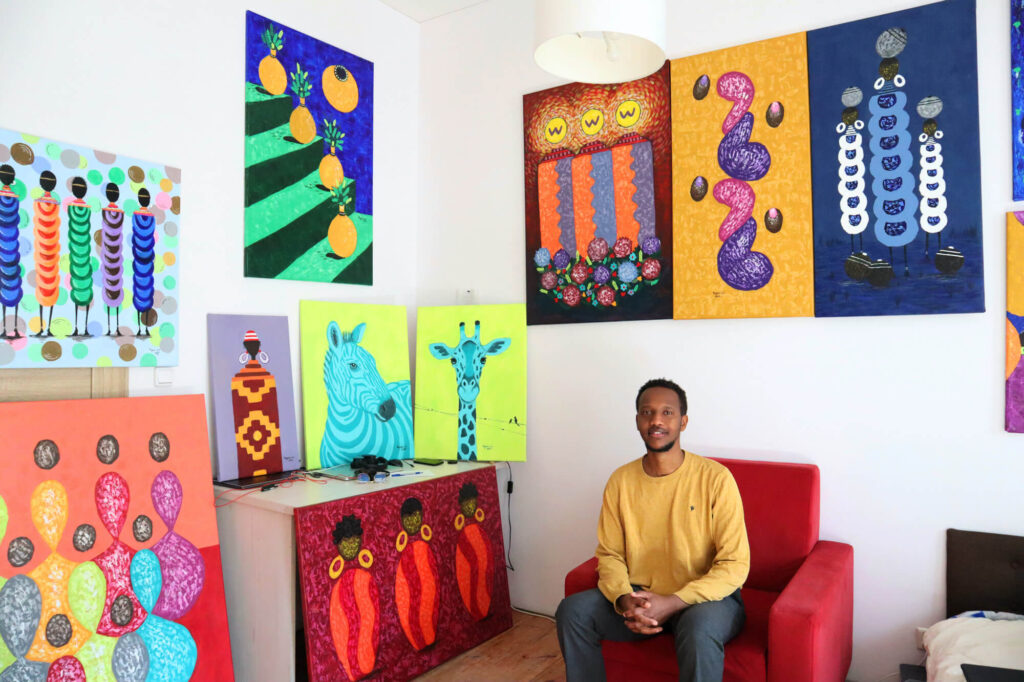


Can you introduce yourself as an artist in a few words?
My name is Aimable Mugabo. I am an artist based in Europe. I work mainly with painting, both abstract and figurative.
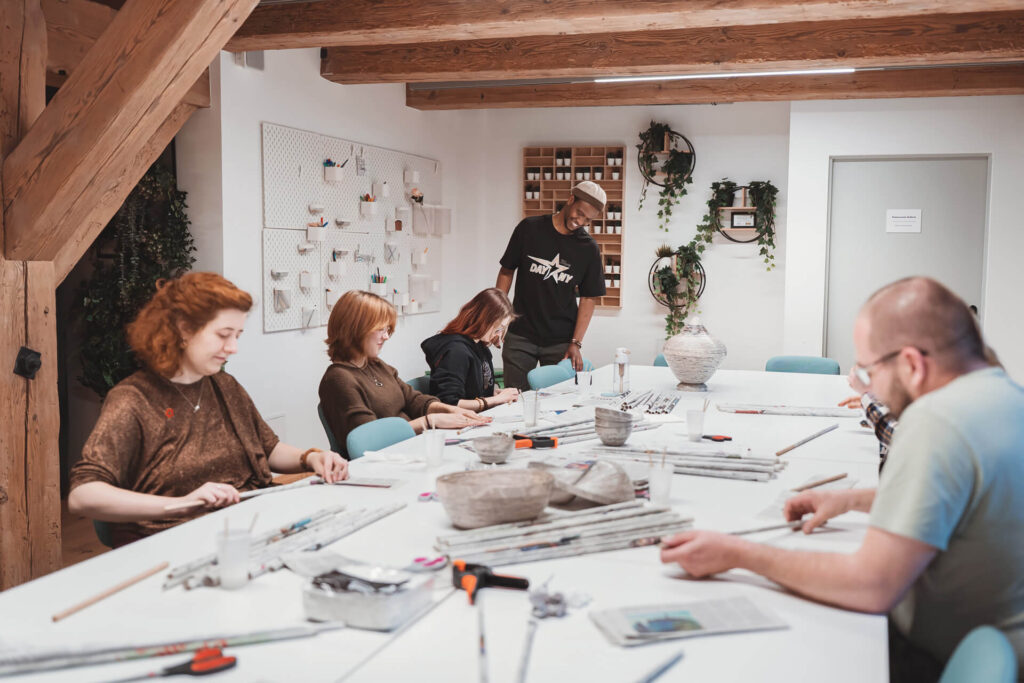
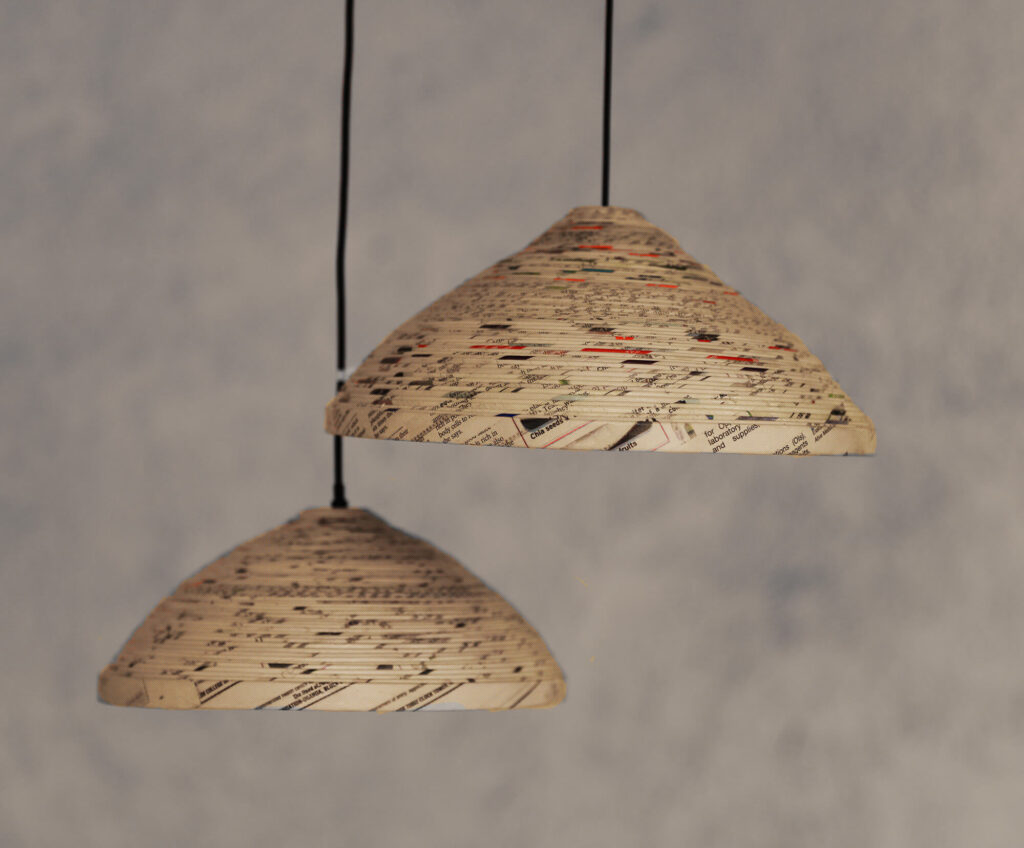
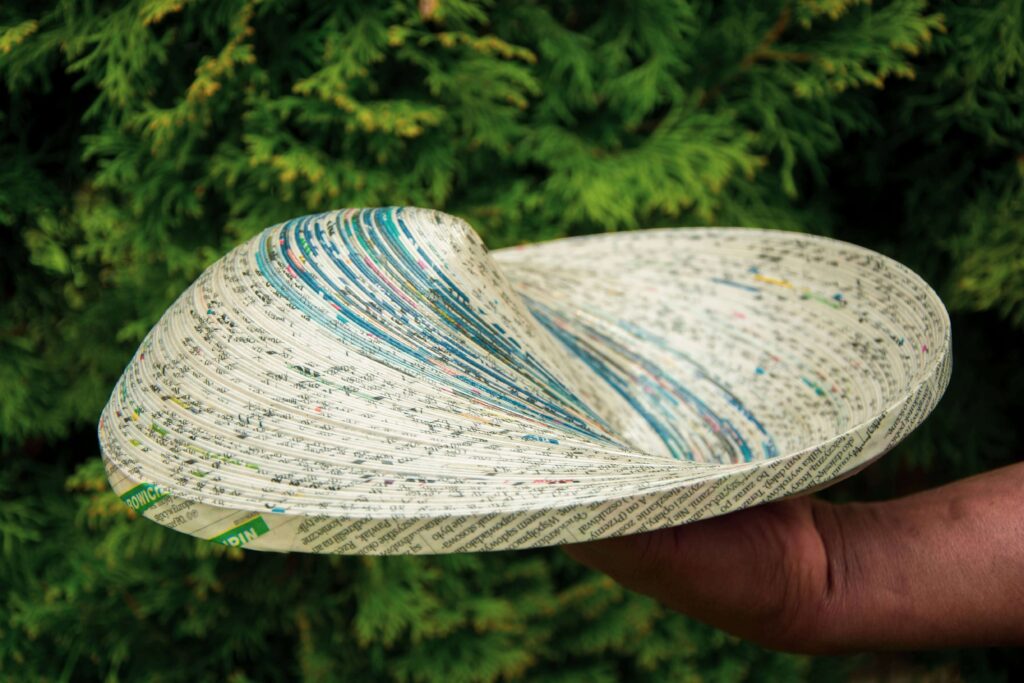
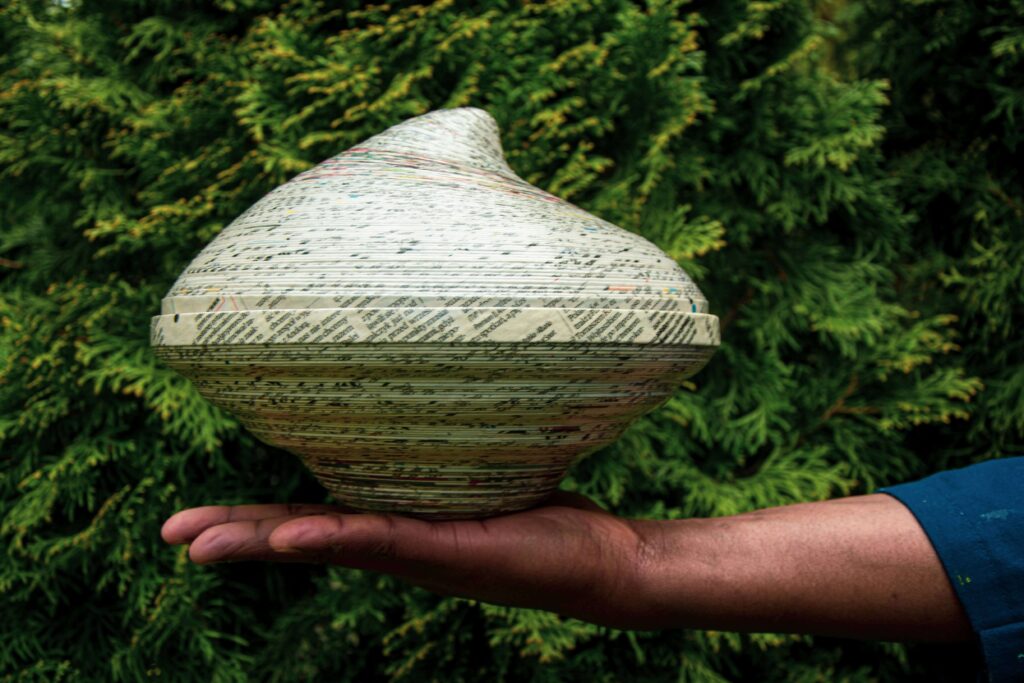
In addition to painting, I also create paper crafts made from recycled newspapers. These are decorative and functional objects. I use old newspapers to turn them into pieces of art that people can actually use.
How did you start with art? Do you remember the moment when you felt you wanted to become an artist?
I’ve always been an artist since I was a young boy, even though I didn’t know I would become one professionally. I grew up surrounded by art — my uncle and my cousin were artists, and I used to imitate their work.
The moment of decision came at the end of high school. I was studying electronics and telecommunications, and I was torn between continuing in that field or choosing art. I asked my best friend for advice, and he told me to choose what I really wanted.
Later that day, during a break, I fell asleep at my desk and had a kind of vision. I saw myself at 50 years old as an engineer — successful, with a company — but something felt missing. Then I imagined myself at 50 as an artist, traveling, sharing my work, talking about art. I remember smiling throughout that vision.
That moment stayed with me. I realized that no matter what job I would do in life, art would always be part of it.
Can you tell me more about your paper craft practice and how it started?
That idea also started in high school, during exam periods. After one exam, I was sitting under a tree and thinking about all the exam papers we were told to leave behind because students would otherwise throw them away.
I started asking myself how paper is made and why something that takes so many resources is only used for two hours and then becomes trash. I did research and realized how much time, water, oil, and energy it takes to produce paper. That made me sad.
I asked myself what I could do as an artist to give more value to this material. That’s when I started experimenting with paper folding and origami. At first, I was just buying paper, which didn’t feel right.
Later, I saw a short video of someone using old newspapers to make a coaster. That idea stayed with me. I started collecting old newspapers — my mother even had boxes of newspapers from years earlier — and I began experimenting.
It was frustrating and slow, but over time I learned how the paper behaves. Eventually, I started making stronger and more refined objects, selling them at markets, festivals, and exhibitions. That’s how the paper craft journey really began.
Your paintings use very vivid, strong colors. Can you tell me more about that?
I don’t consciously plan my colors. If you look at my work, it might seem like it was made by different artists. It really depends on how I feel at the moment.
I don’t choose colors intentionally. I simply like vibrant colors — they make me happy. I paint with excitement. Sometimes I don’t like the result, sometimes others love it. That’s part of the process.
For me, color comes from emotion and energy. When I’m painting, I’m excited, and that excitement shows up on the canvas.
What inspires you as an artist?
Imagination is very important to me — imagining things that don’t yet exist, or maybe cannot exist. I like discovery and even discomfort.
Culture is also a major influence. I come from Rwanda, and African culture, people, clothing, and community life shape my work. In my current series, Maasai Uniform, I explore the identity and visibility of the Maasai people, even though they are not originally from Rwanda. Their strong visual identity and community life inspire me deeply.
I’m also inspired by contemporary images. Sometimes I see something online and feel the urge to paint it — not realistically, but to reinterpret it and build something new around it.
Do you feel inspired by Polish culture as well?
Yes, definitely. I’m often surprised when Polish people describe their culture as colorless. I see many colors here — in traditional clothing, folk dances, flowers, patterns.
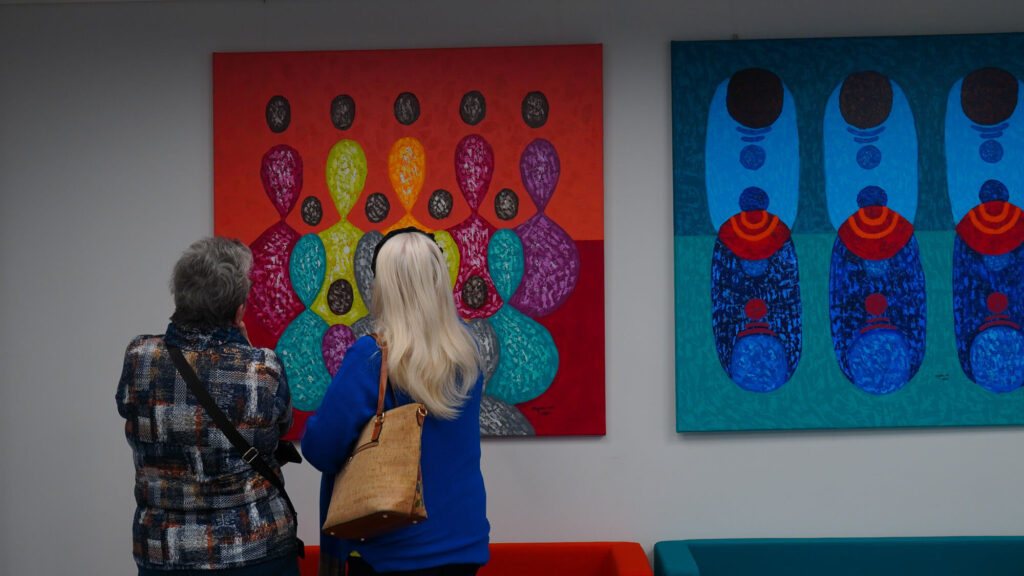
During my first exhibition in Toruń, people kept telling me my paintings were colorful and happy. I felt that this vibrancy already exists here. Maybe winter creates the illusion of grayness, but culturally, Poland is very rich in color.
How do you experience the Polish art scene as a migrant artist?
I haven’t fully entered the contemporary art scene yet. My first connections came through paper craft workshops with NGOs and cultural centers. Through those activities, people discovered that I’m also a painter, which led to exhibitions.
Language is still a barrier for me, and I was also studying and working at the same time. Most of my work has been community-based rather than gallery-focused.
Still, the support I received from local communities, foundations, and universities has been very strong, especially in Toruń. That support helped me organize my first exhibitions.
What kind of collaborations do you dream about?
I would love to collaborate with museums and other artists. That’s one of the reasons I moved to Poznań — to slowly enter the art scene and learn how it works.
At the same time, the craft-based collaborations with communities are already working well for me. I get invited often, sometimes more than I apply. That community connection is very important to me.
What do you wish for yourself as an artist?
I wish to see my work travel around the world and to share it with people. I don’t need a lot of money — I just want enough stability to focus on creating.
Art ideas keep pushing in my head. I want to make more, share more, and see how people respond. Poland is my first big step, and I’m curious where it will take me next.